
Reverse Parking Made Easy: A Step-by-Step Guide for Learners
Ask any learner what makes their palms sweat and reverse parking usually tops the list. Going backwards feels unnatural at first. The steering seems to work the wrong way, the car looks bigger than it is, and there is always someone waiting behind you in the car park.
The good news is that reverse parking is a method, not a talent. After more than 25 years of teaching learners around Mitcham and Melbourne’s east, our instructors find that most people get it within a few lessons once they have a clear routine and know which reference points to watch. This guide walks you through that routine for reversing into a standard parking bay.
Why Reverse Parking Is Worth Learning
Backing into a bay takes a few more seconds than driving in nose first, but it makes leaving much safer. When you reverse out of a space, the cars beside you block your view of pedestrians, trolleys and passing traffic. When you have reversed in, you simply drive forward with a clear view ahead.
It also builds the slow-speed control you need for everything else, from parallel parking on a busy street to tight driveways at home.
Get Set Up Before You Move
Good reversing starts before you select reverse.
- Seat and mirrors: Adjust your seat so you can turn comfortably to look over your shoulder. Set your side mirrors so you can just see the edge of your own car.
- Speed: Reverse parking happens at walking pace or slower. In an automatic, cover the brake and let the car creep. In a manual, hold the clutch near the biting point and keep your right foot ready on the brake.
- Steering rule: When reversing, turn the wheel in the direction you want the back of the car to go. Turn left and the rear moves left.
One thing we tell every learner: going slowly is not a sign of nerves. It gives you time to see, think and correct.
How to Reverse Into a Parking Bay: Step by Step
These steps assume the empty bay is on your left. Swap left and right if it is on the other side.
- Signal and slow down. Indicate early so drivers behind know you are stopping, and check your mirrors.
- Position the car. Drive past the bay, staying around one and a half to two metres out from the parked cars. Stop when your shoulder lines up with the second bay line past your target space.
- Select reverse and look around. Check both mirrors, then do a head check over both shoulders and through the rear window. Watch for pedestrians, especially children, who are hard to see behind a car.
- Turn the wheel and creep back. Turn the steering to full lock to the left and reverse very slowly. Keep looking around the car, not only at one mirror.
- Watch your left mirror. The nearest bay line will appear and angle towards your car. Hold the turn until the car starts to line up with the bay.
- Straighten up. When the car is parallel with the lines and you can see a similar gap in both side mirrors, unwind the steering until the wheels are straight.
- Reverse to the end of the bay. Keep reversing straight until the front of your car is roughly level with the cars either side, or until the rear wheels gently reach the wheel stop.
- Secure the car. Stop, apply the handbrake and select park (automatic) or neutral (manual) before you switch off.
If it goes wrong partway through, stop. Drive forward a little to straighten the car and try again. Correcting early is far better than squeezing in crooked.
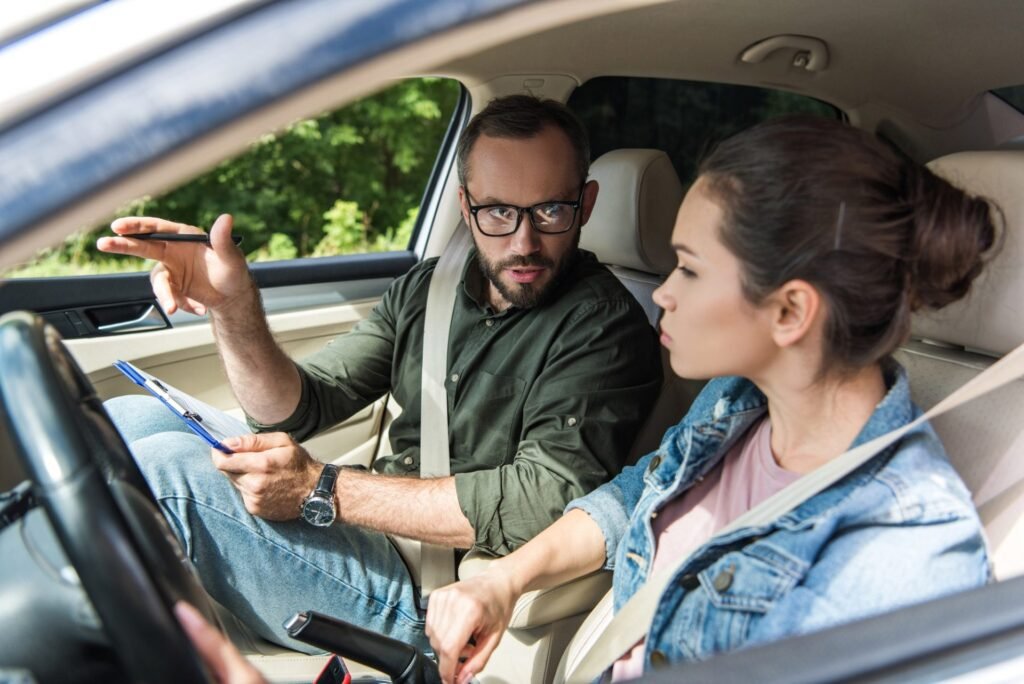
Reverse Angle Parking
Some Victorian streets and car parks are signed for reverse angle parking, where the bays sit on an angle to the kerb. The routine is the same, only shorter. Indicate, drive just past the bay, then reverse while steering towards it until you line up with the angled lines. Keep your speed down, because traffic is passing close behind you.
Common Reverse Parking Mistakes We See
The same few habits come up in our lessons week after week:
- Going too fast. Most crooked parks happen because the car moved further than the learner expected. Slower speed means smaller, easier corrections.
- Staring at one mirror. Mirrors only show part of the picture. Use head checks too, and keep scanning all the way in.
- Turning too early or too late. If you keep ending up close to one side, adjust your stopping point in step two rather than fighting the steering.
- Forgetting the front of the car. As the rear swings into the bay, the front swings out. Make sure you are clear of the car beside you.
Reverse Parking and Your VicRoads Test
The VicRoads drive test assesses low-speed manoeuvres such as the reverse parallel park and the three-point turn. Bay parking uses the same building blocks: slow control, full observation and steering with purpose. If parallel parking is your next hurdle, our parallel parking guide covers that method step by step.
Examiners watch your observation as closely as your final position, so make every head check clear and deliberate. A neat finish will not make up for missed checks.

How to Practise Between Lessons
Pick a quiet car park at a time when it is nearly empty, such as early on a weekend morning. Choose a bay with empty spaces either side so a small mistake costs nothing. Practise the same side several times before switching, then try bays on your right once the left feels easy.
Your supervising driver can help by standing outside the car for the first few attempts and telling you how close the lines are, then stepping back once you have the feel. Many learners find that a few structured driving lessons for learners in Mitcham speed this up, because our dual control cars let you practise tight manoeuvres with an instructor who can step in if needed.
Book a Lesson With Mitcham Driving School
Reverse parking becomes second nature with the right routine and some guided practice. Our VicRoads-accredited instructors teach in dual control automatic and manual cars, with free pickup across Mitcham, Vermont, Nunawading, Blackburn, Box Hill, Ringwood and nearby suburbs.
Ready to stop dreading the car park? Contact Mitcham Driving School or call 0468 516 502 to book your next lesson.